 Dayton Premier Water Damage Restoration
Structural Drying Dayton Ohio
IICRC ASD certified — daily moisture monitoring — free estimate
Call Now — (937) 930-4317Structural drying in Dayton, Ohio is the step that separates a water damage job from a mold remediation job. After water extraction removes standing water, building materials — drywall, framing, subfloors, insulation — retain significant moisture. Without professional dehumidification and airflow, that moisture enables mold growth within 24–48 hours. Ohio’s warm, humid summers make this window shorter than many homeowners expect. Our IICRC ASD (Applied Structural Drying) certified technicians manage the complete drying process from baseline moisture readings through documented drying goal achievement.
How Structural Drying Works in Dayton
Structural drying follows the psychrometric principles established in the IICRC S500 standard. After water extraction, we take baseline moisture readings with calibrated moisture meters at multiple points throughout the affected area — walls, floors, ceilings, and building cavities. These readings establish the drying goal: the moisture content that must be reached before the structure is considered dry.
Ohio’s climate presents a two-season drying challenge. In summer, Dayton’s average relative humidity exceeds 70% in July — ambient air that is already near saturation slows evaporation from wet building materials and demands high-capacity LGR (low grain refrigerant) dehumidifiers to achieve drying goals. In winter, unheated crawl spaces and basements can be significantly colder than the heated living space above, creating condensation dynamics that require careful equipment staging across the temperature differential.
LGR dehumidifiers are positioned to remove evaporated moisture from the air. High-velocity axial air movers are staged to accelerate evaporation from wet surfaces. Daily monitoring tracks grain depression and moisture meter readings at the same tracked points throughout the drying cycle. Most residential structural drying jobs in Dayton complete in 3–5 days.
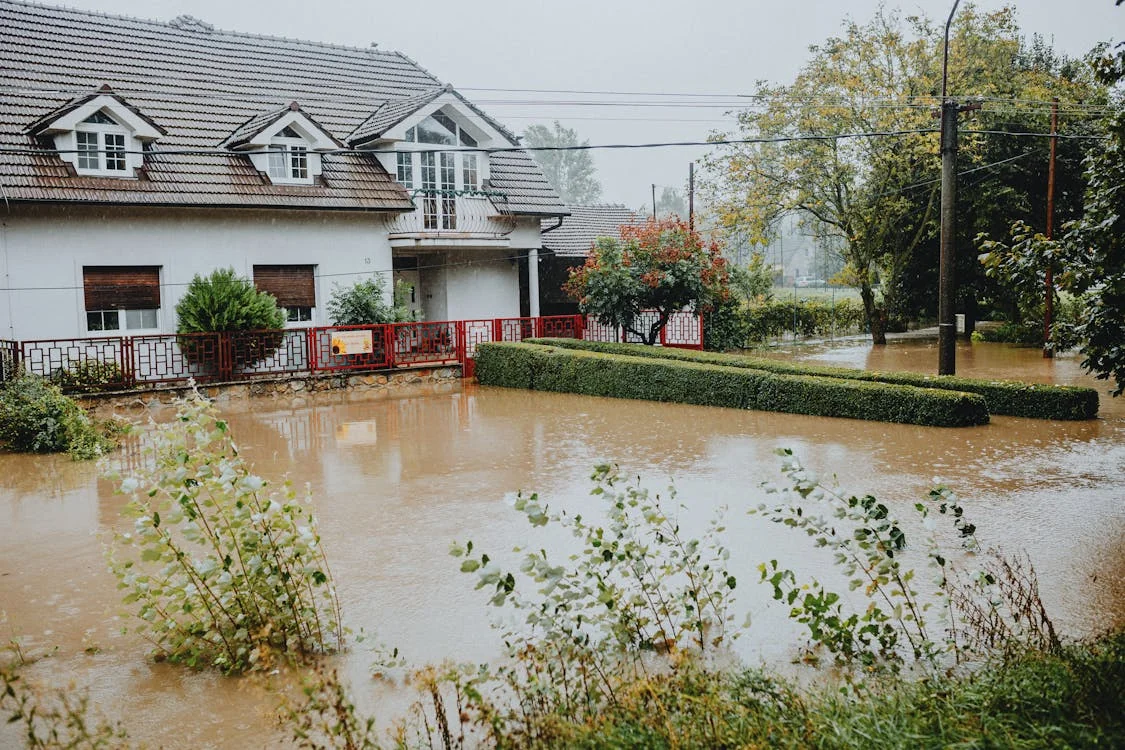
What We Dry After Water Damage
Water doesn’t stop at the surface. It wicks through materials based on their absorption characteristics:
Drywall and Wall Cavities
Standard drywall absorbs water rapidly. Saturation can extend 12–18 inches above the visible waterline in a flooded room. Thorough drying within the IICRC timeline can preserve intact drywall in many cases. Wet drywall repair is needed when saturation was prolonged or where Category 2/3 water is involved.
Subfloors and Hardwood Flooring
Water under hardwood floors saturates the subfloor beneath and can buckle finish flooring from below. We monitor both layers independently. In Dayton’s summer humidity, subfloor materials that remain wet become a primary mold substrate within days.
Insulation
Fiberglass batt insulation retains water and is typically non-restorable once saturated — removal and replacement is standard. Closed-cell spray foam insulation can sometimes be dried in place with cavity drying techniques. Basement and crawl space insulation in Dayton homes is at elevated risk during spring flooding and CSO events.
Structural Framing
Wood framing absorbs moisture more slowly but is subject to swelling, warping, and mold growth in Ohio’s humid conditions. Secondary damage prevention through thorough drying is significantly more cost-effective than structural repair or mold remediation of framing members.
Why Proper Drying Prevents Mold
The 24–48 hour mold colonization window is not a warning — it’s a timeline that restoration professionals work against from the moment extraction begins. Mold requires three things: moisture, a food source (organic material in building products), and temperature. In a water-damaged structure, two of those three are always present. Professional structural drying removes the third.
Partial drying — where surface materials test dry but cavities remain saturated — is the most common cause of mold discovery weeks after a Dayton water event. Homes near the Great Miami, Mad, and Stillwater Rivers with spring flood histories are particularly susceptible to this pattern: the event is managed, the visible water is gone, but cavity saturation drives mold colonization that isn’t discovered until weeks later.
This is why moisture meters and thermal imaging replace visual inspection in professional drying protocol. A surface that feels and looks dry can have moisture readings well above drying goal thresholds.
If mold is discovered during the drying process or found to have established before we arrived, see our mold remediation Dayton Ohio service.
Professional structural drying in Dayton — call for a free assessment.
(937) 930-4317Frequently Asked Questions — Structural Drying
-
Most residential structural drying jobs in Dayton complete in 3–5 days with industrial equipment in place and daily moisture monitoring. Ohio's humid summers (July average relative humidity exceeds 70%) can extend drying timelines if equipment is undersized or improperly staged. Class 3/4 events with heavy saturation, or jobs where drying was delayed, can also take longer. Drying is complete when moisture meter readings reach the pre-established drying goal — not before.
-
We use a combination of surface-facing axial air movers and cavity drying techniques. For walls that haven't been fully saturated, high-velocity air movers directed at the wall surface accelerate evaporation. For wall cavities with significant saturation, we may drill small access holes to direct airflow into the cavity — a standard technique that allows cavity drying without full drywall removal.
-
The only reliable answer is a calibrated moisture meter. Drywall that tests dry at the surface can still be 15–20% above drying goal thresholds in cavities. Structural drying is not complete until moisture readings at tracked points match the pre-loss baseline. Visual inspection and touch are not reliable indicators.
-
Professional structural drying requires LGR (low grain refrigerant) dehumidifiers, high-velocity axial air movers, thermal hygrometers for ambient air monitoring, calibrated moisture meters for material testing, and thermal imaging cameras for identifying moisture in cavities and behind surfaces. Consumer-grade equipment — household dehumidifiers and box fans — lacks the capacity and precision to achieve professional drying outcomes, particularly in Ohio's humid summer conditions.
-
Mold growth can begin if moisture levels remain above the threshold for extended periods during drying. This is why daily monitoring and proper equipment staging matter — you want to be reducing moisture continuously, not just managing it. If pre-existing mold is discovered during the drying process, we address it as a separate scope under our mold remediation service.
Get a Free Structural Drying Assessment in Dayton
Call (937) 930-4317 for a free assessment — our IICRC ASD certified technicians will take baseline moisture readings and provide a complete drying plan.
- No charge for assessment
- IICRC ASD certified technicians
- Insurance documentation provided
- Same-day response for most emergencies